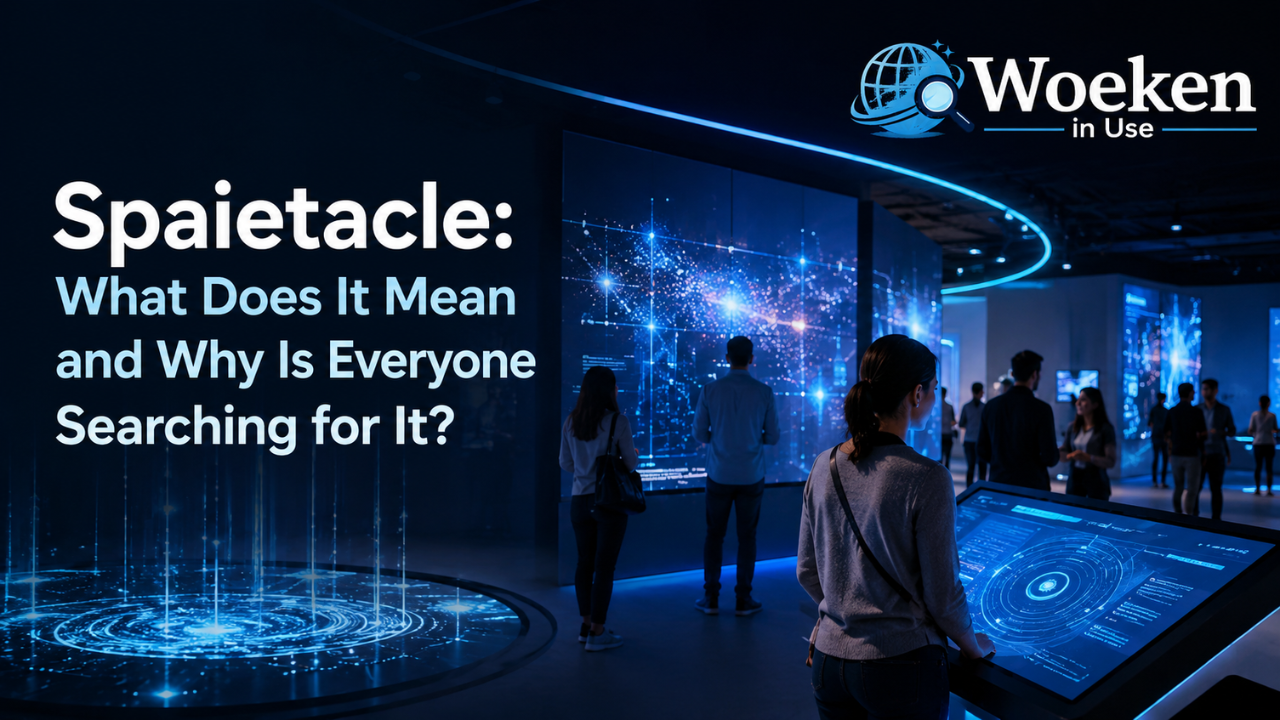
Spaietacle: What Does It Mean and Why Is Everyone Searching for It?
Spaietacle is an emerging term used to describe an experience that blends space, spectacle, storytelling, interaction, and audience engagement. In simple words, it is not just something people look at. It is something they feel, explore, remember, and participate in.
The term is still developing, so it does not have one fixed dictionary definition. However, most current uses point toward the same idea: a spaietacle is a memorable experience created by combining a physical or digital space with visual impact, emotional storytelling, and interactive design.
For example, a normal product display shows an item on a shelf. A spaietacle-style product display might use lighting, sound, screens, motion, AR elements, and visitor interaction to turn that product into a small story. A regular event may simply present information. A spaietacle-style event makes the audience feel like they have stepped inside the message.
This is why the keyword is often connected with immersive experiences, digital creativity, visual storytelling, spatial design, online engagement, and modern brand experiences.
Why the Term Spaietacle Is Getting Attention
The internet creates new words quickly. Some terms appear because people need a fresh way to describe new behaviors, tools, or creative trends. Spaietacle seems to fit that pattern. It gives creators, marketers, designers, and bloggers a way to talk about experiences that are more than ordinary content.
People are no longer satisfied with simple static information. They want websites that feel alive, events that are interactive, product launches that feel memorable, and online content that holds attention. This is one reason terms like immersive experience, interactive storytelling, and spatial design are becoming more common.
Spaietacle sits in the middle of these ideas. It suggests a blend of visual drama, intelligent space, user participation, and emotional impact. That makes it useful for many industries, including digital marketing, entertainment, exhibitions, education, retail, hospitality, gaming, and content creation.
Another reason the word is gaining interest is curiosity. The spelling looks unusual, so users search it to understand whether it is a typo, a brand, a platform, or a new concept. This creates a strong need for clear explanation.
Spaietacle Meaning: Space, Spectacle, and Experience
The easiest way to understand Spaietacle is to break it into two ideas: space and spectacle.
A spectacle is something impressive, eye-catching, or memorable to view. Dictionaries commonly connect spectacle with striking displays, impressive performances, or exciting sights. The spatial side relates to how people move through, understand, and experience a space. Spatial design is not only about where objects are placed; it is about how those objects guide attention, movement, emotion, and meaning.
When these ideas come together, spaietacle becomes more than decoration. It becomes a designed experience where the environment plays an active role.
A strong spaietacle may include:
- A clear theme or story
- A visually impressive setting
- Lighting, sound, or motion
- Interactive screens or physical touchpoints
- Audience participation
- Emotional moments
- A reason for people to remember and share the experience
This is why spaietacle is often linked with immersive rooms, AR displays, exhibition spaces, digital storytelling, brand activations, and interactive online experiences.
Is Spaietacle a Real Word, Platform, or Trend?
This is one of the most important questions because the search results are mixed.
Spaietacle is best understood as an emerging concept or trend, not a fully standardized word. Some websites use it as a broad idea for immersive digital experiences. Others describe it as a strategy for standing out online. A few treat it like a digital platform with pricing, features, and reviews.
Because the term is not yet widely standardized, readers should pay attention to context. When someone says “spaietacle,” they may mean:
- An immersive experience concept
- A content or branding strategy
- A digital design approach
- A platform or tool being reviewed by a blog
- A misspelling or confusion with another term
There is also a separate term, sPAIEctacle, used in French contexts for payroll and administrative workflows in the performing arts sector. That is different from the broader lowercase keyword “spaietacle.” If you are searching for payroll software, contract management, or French entertainment-industry administration, you may be looking for sPAIEctacle, not the creative/digital concept.
For most English-language searches, however, the intent behind spaietacle appears to be: “What does this term mean, and how is it used?”
How Spaietacle Works
A spaietacle works by turning a simple message, product, place, or idea into a more memorable experience. Instead of relying only on words or visuals, it uses multiple layers of engagement.
Think of it like this:
A normal webpage tells visitors about a new product.
A spaietacle-style webpage may use scroll animations, interactive product views, sound cues, story sections, comparison tools, and personalized choices.
A normal exhibition places objects in a room.
A spaietacle-style exhibition guides visitors through lighting, sound, movement, narration, objects, and interactive stations.
A normal brand launch shows a logo and product images.
A spaietacle-style launch creates an atmosphere around the brand so people remember the feeling, not just the information.
In digital spaces, technologies such as augmented reality can support this approach. Augmented reality adds digital information into a user’s real environment rather than fully replacing the real world. However, spaietacle does not always require advanced technology. A strong story, thoughtful lighting, physical layout, and audience participation can also create a powerful experience.
Core Elements of a Strong Spaietacle Experience
1. A Clear Purpose
A spaietacle should never exist just to look impressive. It needs a purpose. That purpose may be to educate, entertain, promote, inspire, explain, or help people connect with an idea.
Without purpose, the experience becomes noise. With purpose, every design choice has meaning.
For example, a museum may use a spaietacle approach to help visitors understand climate change. The lighting, temperature, sound, visuals, and movement through the room can all support the message. The result is stronger than simply reading a wall of text.
2. Spatial Design
Space is one of the most important parts of spaietacle. Whether the space is a room, a website, an app interface, or a virtual world, it should guide the user naturally.
Good spatial design answers questions like:
- Where should the visitor look first?
- What should they do next?
- How should the experience flow?
- Which areas should feel calm, exciting, mysterious, or dramatic?
- How can the design prevent confusion?
In digital design, this may mean clean navigation, interactive sections, smooth transitions, and logical content flow. In physical spaces, it may mean pathways, lighting zones, sound direction, display placement, and comfortable movement.
3. Visual Impact
The “spectacle” side of spaietacle depends on visual impact. This does not mean everything must be flashy. It means the experience should be visually memorable.
Visual impact can come from:
- Strong color choices
- Dramatic lighting
- Large-scale screens
- Motion graphics
- Projection mapping
- Minimal but powerful design
- Unexpected visual contrast
- Beautiful product presentation
The goal is not to overwhelm people. The goal is to create a moment they remember.
4. Storytelling
A spaietacle becomes stronger when it tells a story. Humans remember stories better than isolated facts. A story gives the experience direction, emotion, and meaning.
A simple storytelling structure could be:
- Problem
- Discovery
- Transformation
- Result
For example, a skincare brand could create a spaietacle experience where visitors move through different “skin journey” zones: pollution, repair, hydration, and glow. Each zone tells part of the story, while the product becomes the solution.
5. Audience Participation
A normal spectacle is watched. A spaietacle is experienced.
Participation can be simple or advanced. It might include touching a screen, choosing a path, answering a question, scanning a QR code, walking through a themed area, changing lighting with movement, or receiving a personalized recommendation.
The important part is that the audience feels involved. Participation turns passive viewers into active users.
6. Sensory Detail
A spaietacle often uses more than one sense. Visuals are important, but sound, texture, motion, scent, and atmosphere can make the experience deeper.
For example:
- A luxury retail space may use soft lighting, calm music, premium textures, and subtle fragrance.
- A gaming event may use dramatic sound, neon lighting, motion screens, and interactive zones.
- A wellness exhibition may use natural textures, slow visuals, soft audio, and relaxing movement.
When sensory elements support the main idea, the experience feels complete.
7. Emotional Memory
The best spaietacle experiences create emotion. People may forget exact details, but they remember how something made them feel.
A strong emotional moment might be wonder, surprise, nostalgia, excitement, calm, curiosity, or confidence. This emotional layer is what makes the experience shareable and memorable.
Practical Examples of Spaietacle
Example 1: A Product Launch
Imagine a tech company launching smart glasses. A normal launch page may include specifications, images, and pricing. A spaietacle-style launch could include a virtual room where visitors explore different use cases: travel, work, fitness, and entertainment.
Each area shows how the glasses fit into daily life. Visitors can interact with demos, compare features, and see the product in real environments. The product becomes part of a story, not just a list of features.
Example 2: A Museum Exhibit
A museum exhibit about ancient cities could use projection, sound, lighting, and walking paths to make visitors feel like they are entering a lost civilization. Instead of only reading plaques, visitors hear market sounds, see walls come alive through animation, and interact with digital maps.
That is a spaietacle because the space becomes part of the learning experience.
Example 3: A Retail Store
A fashion store could create a seasonal spaietacle by turning its space into a themed journey. For a winter collection, the store might use cool lighting, soft snow-like visuals, interactive mirrors, and styling stations.
The clothes are still the main product, but the environment makes shopping feel more emotional and memorable.
Example 4: A Website or Blog Feature
A blog article can also use a spaietacle mindset. Instead of plain text only, it may include interactive graphics, comparison tables, scroll-based storytelling, embedded examples, mini quizzes, and clean visual sections.
The goal is not to add random effects. The goal is to make the content easier to understand and more enjoyable to explore.
Example 5: An Educational Experience
A school or online course could use spaietacle principles to teach science. Instead of explaining the solar system only with text, the lesson could include a 3D model, motion animation, sound effects, guided exploration, and interactive questions.
This helps students learn through experience, not just memorization.
Spaietacle in Digital Content and Branding
For brands, spaietacle can be a powerful way to stand out. Online audiences see thousands of posts, ads, and pages every day. Ordinary content often disappears quickly. Experience-driven content has a better chance of being remembered.
A spaietacle approach can help brands create:
- More engaging landing pages
- Better product storytelling
- Stronger social media campaigns
- Interactive brand presentations
- Memorable event pages
- Immersive ads
- Digital showrooms
- Virtual product demos
For content creators, spaietacle means thinking beyond “What should I publish?” and asking, “What should the audience experience?”
That question changes everything. It pushes creators to think about flow, emotion, interaction, clarity, and usefulness.
Benefits of Using the Spaietacle Approach
Better Attention
People pay more attention when an experience feels fresh, clear, and interactive. Spaietacle can help capture attention because it combines visual interest with participation.
Stronger Memory
When users experience something instead of only reading or watching it, they are more likely to remember it. A strong environment, story, or interaction creates mental anchors.
Higher Engagement
Interactive experiences encourage people to spend more time exploring. This can be useful for websites, events, exhibitions, product launches, and educational content.
Better Brand Differentiation
Many brands sound the same online. A spaietacle-style experience can help a brand feel different by creating a unique atmosphere and emotional identity.
More Shareability
People like sharing experiences that feel interesting, beautiful, surprising, or useful. A well-designed spaietacle can naturally encourage photos, videos, social posts, and word-of-mouth discussion.
Improved Understanding
Complex topics become easier to understand when users can explore them visually and interactively. This is especially useful in education, technology, finance, healthcare, and product demonstrations.
Common Mistakes to Avoid
Making It Too Complicated
A spaietacle should feel rich, not confusing. Too many animations, sounds, popups, or interactive choices can overwhelm users.
Clarity should always come before decoration.
Focusing Only on Visuals
A beautiful design is not enough. If there is no story, purpose, or user value, the experience may feel empty.
Ignoring Accessibility
Not every user can handle bright flashes, loud sound, fast movement, or complex navigation. A thoughtful spaietacle should include accessible design choices such as readable text, quiet options, clear controls, mobile compatibility, and alternative ways to experience content.
Forgetting the Main Message
Every element should support the main idea. If the audience remembers the effects but forgets the message, the experience has failed.
Using Technology Without Need
AR, VR, AI, and motion graphics can be helpful, but they are not required. Sometimes a simple, well-planned experience works better than expensive technology.
How to Create a Spaietacle-Style Experience
Step 1: Define the Main Goal
Start with one clear goal. Do you want to educate, sell, entertain, build trust, explain a product, or create emotional impact?
A clear goal keeps the project focused.
Step 2: Understand the Audience
Ask what your audience needs, expects, fears, enjoys, and remembers. A spaietacle for children will look different from one for business executives. A luxury audience may want elegance and calm. A gaming audience may expect energy and interaction.
Step 3: Build a Simple Story
Create a beginning, middle, and end. Even a small experience should have flow.
For example:
- Beginning: Introduce the problem or world.
- Middle: Let the user explore or interact.
- End: Deliver the main message or transformation.
Step 4: Design the Space
Decide how users will move through the experience. This applies to both physical and digital spaces.
For a website, space means layout, scrolling, menus, sections, visuals, and interaction. For an event, space means entry points, pathways, zones, lighting, seating, screens, and physical displays.
Step 5: Add Sensory and Visual Layers
Choose the visual style, sound, lighting, colors, textures, and motion carefully. Every layer should support the same mood.
Step 6: Make It Interactive
Add at least one meaningful interaction. This could be a quiz, choice, demo, touchscreen, AR filter, guided path, product configurator, or personalized result.
Step 7: Test the Experience
Before launching, test with real users. Watch where they get confused, bored, or excited. Improve the experience based on feedback.
Step 8: Measure Results
For digital projects, measure time on page, clicks, shares, conversions, scroll depth, and feedback. For physical events, measure attendance, dwell time, social shares, satisfaction surveys, and return visits.
Spaietacle vs Spectacle vs Immersive Experience
Spaietacle is closely related to spectacle and immersive experience, but it is useful to separate them.
A spectacle is something impressive to look at. It may be a parade, performance, display, or dramatic visual moment.
An immersive experience surrounds the audience and makes them feel involved in an environment.
A spaietacle combines both ideas with a stronger focus on space, interaction, and designed memory. It is not only impressive to see; it is designed to be explored.
Here is a simple comparison:
| Term | Main Idea | Audience Role | Example |
| Spectacle | Impressive visual display | Mostly watching | Fireworks show |
| Immersive experience | Surrounding environment | Exploring or feeling present | Walk-through exhibition |
| Spaietacle | Space + spectacle + story + interaction | Participating and remembering | Interactive brand world or sensory exhibit |
This distinction is helpful because not every spectacle is immersive, and not every immersive experience is truly memorable. A strong spaietacle should be both impressive and meaningful.
Future of Spaietacle
The future of spaietacle will likely grow alongside digital experiences, mixed reality, AI personalization, interactive exhibitions, and spatial computing. As more businesses compete for attention, experiences that feel memorable will become more valuable.
However, the future should not be only about technology. The best spaietacle experiences will combine technology with human emotion. People do not remember a screen just because it is large. They remember how the experience made them feel.
In the coming years, spaietacle may become more common in:
- Smart retail stores
- Digital museums
- Online education
- Product launches
- Brand activations
- Tourism experiences
- Entertainment venues
- Virtual events
- Interactive websites
- AR shopping tools
- Hospitality design
The strongest examples will be simple enough to understand, beautiful enough to attract attention, and meaningful enough to be remembered.
Conclusion
Spaietacle is best understood as a modern experience concept that combines space, spectacle, storytelling, sensory design, and participation. It reflects a growing shift in how people interact with content, brands, events, and digital environments.
Instead of simply showing information, a spaietacle turns information into an experience. Instead of asking people only to watch, it invites them to explore. Instead of relying only on decoration, it uses space, emotion, and interaction to create memory.
Because the term is still emerging, different websites explain it in different ways. Some use it for immersive experiences, some for digital strategy, and some for platform-style reviews. The clearest and most useful meaning is this: spaietacle is about making an idea feel alive through space, story, visual impact, and audience engagement.
For businesses, creators, educators, and designers, the value of spaietacle is simple. It helps people pay attention, understand better, feel more connected, and remember the message long after the experience ends.
Frequently Asked Questions
What does spaietacle mean?
Spaietacle means an experience that blends space, spectacle, storytelling, and interaction to create something memorable. It is commonly used to describe immersive digital or physical experiences.
Is spaietacle a real word?
Spaietacle is an emerging term, not a widely standardized dictionary word. It is mostly used online to describe creative, immersive, and visually engaging experiences.
Is spaietacle the same as spectacle?
No. A spectacle is mainly something impressive to view. Spaietacle goes further by adding space, interaction, story, and audience participation.
Does spaietacle require AR or VR?
No. AR and VR can support a spaietacle, but they are not required. Lighting, sound, storytelling, layout, physical design, and user participation can also create a spaietacle-style experience.
Is Spaietacle a platform or software?
Some search results describe Spaietacle as a digital platform, but the broader search intent treats it as a concept or trend. Users should check the context carefully because the term is not used consistently across all websites.
Who can use the spaietacle approach?
Brands, creators, event planners, educators, museum designers, retailers, hospitality teams, marketers, and website owners can use spaietacle principles to make experiences more engaging and memorable.
If you enjoyed this article, read more about When Should Someone Speak to a Doctor?