
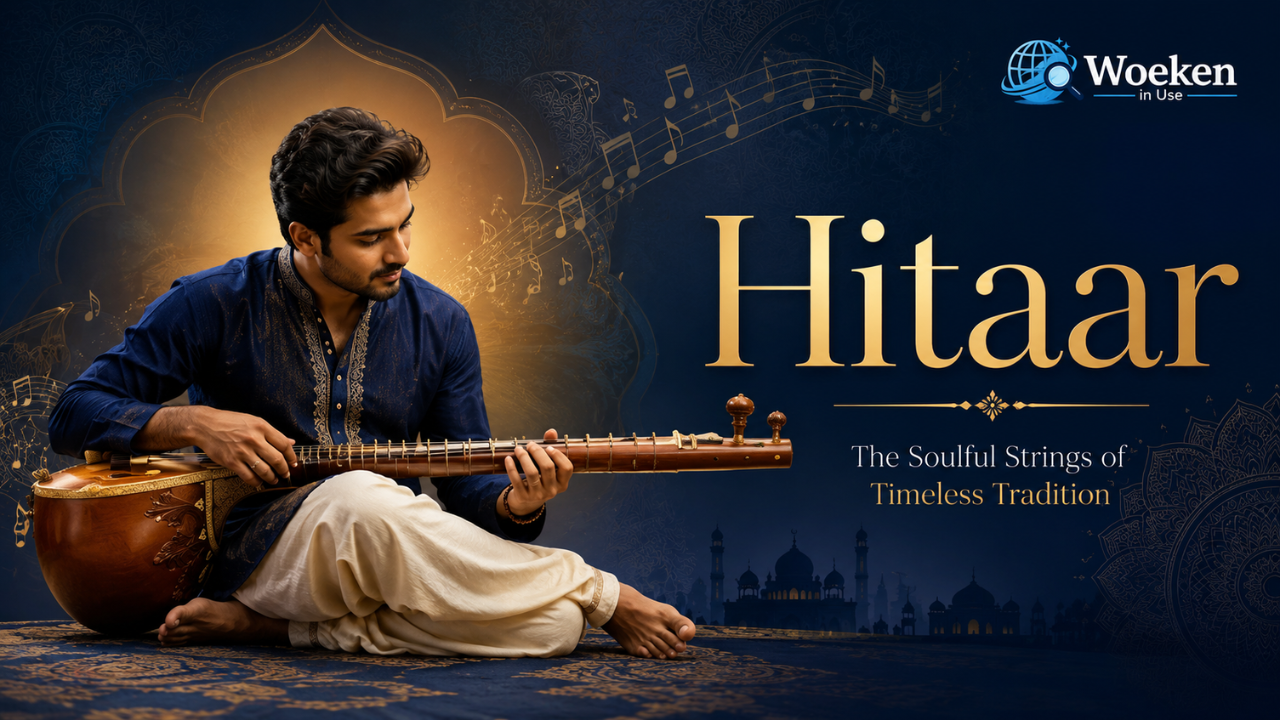
Hitaar: Meaning, Origin, Uses, and Modern Significance Explained
The word Hitaar has started appearing across search results, blogs, name-meaning pages, cultural articles, and music-related discussions. At first, it may look like a simple word with one clear definition. However, when you look deeper, Hitaar is actually a keyword with more than one possible meaning depending on the context.
Some readers search for Hitaar meaning because they want to understand it as a name. Others search for it because they saw the word used in a blog, social post, cultural article, or music-related discussion. A few may be looking for its Urdu or Arabic-language background. This is why a complete explanation needs to cover the word from several angles instead of forcing one narrow definition.
In simple terms, Hitaar can refer to a name, a language term, or a modern cultural/music-related concept depending on where and how it is used. This guide explains those meanings clearly, shows why the word is gaining attention, and helps readers understand the difference between verified meaning, online interpretation, and modern creative use.
What Is Hitaar?
Hitaar is a multi-context word. It is used in name-meaning sources, Urdu/Arabic language references, and newer online articles that describe it as a cultural, musical, or artistic idea. Because of this, the safest way to understand Hitaar is to look at the context first.
If someone is discussing baby names, Hitaar is usually treated as a boy’s name with an Arabic-language connection. If someone is discussing language or Urdu vocabulary, Hitaar may appear as a formal word with a specific dictionary meaning. If someone is discussing modern culture, music, or traditions, Hitaar may be used more broadly as a creative concept connected with rhythm, storytelling, heritage, and community.
This makes Hitaar different from common everyday words. Its meaning changes based on usage. A person reading a name website will understand it differently from someone reading a cultural blog or music article. That is why many readers feel confused after seeing different explanations online.
A helpful way to define Hitaar is this:
Hitaar is a word with linguistic, name-related, and modern cultural interpretations. It may describe a name, a traditional-sounding concept, or a creative expression linked with music, identity, and community.
Hitaar at a Glance
Before going into deeper detail, here is a quick overview:
| Aspect | Explanation |
| Main keyword | Hitaar |
| Common spelling variation | Hitar |
| Language association | Often linked with Arabic/Urdu references |
| Name use | Listed as a Muslim boy name in some name databases |
| Modern blog use | Culture, music, rhythm, tradition, storytelling, and community |
| Search intent | Meaning, origin, name meaning, cultural significance, and modern use |
| Best way to understand it | Check the context before deciding the meaning |
This table shows why Hitaar cannot be explained properly in only one sentence. The keyword has layered intent, which means readers may be searching for different answers even though they are using the same word.
The Meaning of Hitaar in Name and Language Use
One of the clearest search meanings of Hitaar comes from name-related sources. In this context, Hitaar is commonly presented as a Muslim boy name. It is usually connected with Arabic origin and is often translated as “cap” in name-meaning directories.
This name-based meaning is simple and direct. Parents or readers searching for the name may want to know:
- What does Hitaar mean?
- Is Hitaar a boy name?
- What is the origin of Hitaar?
- Is Hitaar an Islamic or Muslim name?
- How is Hitaar spelled?
- What is the Urdu meaning of Hitaar?
In this context, the answer is usually short: Hitaar is used as a male name and is associated with Arabic origin.
However, there is also a dictionary-style use of the word in Urdu/Arabic references. This meaning is more technical and may not be suitable for casual baby-name interpretation. That is why readers should be careful when comparing name websites with dictionary websites. A name page may simplify the meaning, while a dictionary may provide a more literal or specialized explanation.
Hitaar vs Hitar
Another important point is spelling. Some sources use Hitaar, while others use Hitar. Both forms appear online, and they may refer to the same name or a closely related spelling variation.
For readers, the practical difference is simple:
- Hitaar looks like a longer transliteration.
- Hitar is a shorter spelling.
- Both may appear in name searches.
- The intended meaning depends on the source.
If you are using the word for a name, brand, article, or creative project, Hitaar often looks more distinctive and memorable.
Why People Are Searching for Hitaar
People search for Hitaar for several reasons. The keyword is short, unusual, and unclear, which naturally creates curiosity. When a word is unfamiliar, readers usually search it to find its meaning, origin, and usage.
The first major reason is name research. Parents looking for unique Muslim baby names may search Hitaar because it appears in name directories. They want to know whether the name is meaningful, suitable, easy to pronounce, and connected to a respectable origin.
The second reason is language curiosity. People who see the word in Urdu, Hindi, Roman Urdu, or Arabic-related content may want to know what it means. This type of search is usually more dictionary-focused.
The third reason is modern online trend discovery. Several blogs now discuss Hitaar as a cultural, artistic, or musical idea. A reader may find the word in an article and search it again to understand whether it is a tradition, a musical instrument, a performance style, or a symbolic concept.
The fourth reason is content discovery. Because Hitaar is an uncommon keyword, it attracts bloggers, writers, and readers interested in emerging or lesser-known topics.
In short, people search for Hitaar because it feels meaningful, but its meaning is not immediately obvious.
Hitaar as a Cultural and Creative Concept
In many modern articles, Hitaar is presented as a cultural idea connected with identity, tradition, community, and expression. These articles often describe Hitaar as something more than a word. They connect it with music, dance, storytelling, harmony, and shared heritage.
When used this way, Hitaar becomes a symbolic concept. It may represent:
- Cultural memory
- Community bonding
- Artistic expression
- Traditional performance
- Music and rhythm
- Emotional storytelling
- Harmony between people and nature
- Respect for heritage
This creative interpretation is popular because it gives the word a rich and human feeling. Instead of being only a dictionary term, Hitaar becomes a way to talk about how people express identity through art, sound, movement, and shared experience.
However, readers should understand an important point: modern cultural uses of Hitaar are not always explained consistently online. Some pages connect it with Japanese-style tradition. Others connect it with Arab heritage, music, or folk performance. Because of these differences, it is better to describe Hitaar as a modern cultural keyword rather than making one fixed historical claim without context.
A balanced explanation would be: In modern online writing, Hitaar is often used as a cultural and artistic concept connected with tradition, music, storytelling, and community values.
Hitaar in Music, Rhythm, and Storytelling
One of the strongest modern angles around Hitaar is music. Several online articles describe Hitaar music as a form of expressive performance that blends rhythm, melody, storytelling, and cultural emotion.
In this interpretation, Hitaar is not only about sound. It is about communication. Music becomes a way to share memories, emotions, values, and community history. This is why Hitaar is often linked with storytelling.
A Hitaar-inspired performance may include:
- Rhythmic patterns
- Folk-style melodies
- Handcrafted or traditional instruments
- Vocal expression
- Dance or body movement
- Poetry or spoken storytelling
- Community participation
The most important idea here is emotional connection. Hitaar-style music, as described in modern articles, is not treated as background sound. It is presented as an experience that connects performer and audience.
Rhythm in Hitaar
Rhythm is often described as the foundation of Hitaar music. A steady rhythm gives structure to the performance and helps listeners feel the movement of the story. In many traditional music forms, rhythm also helps people participate through clapping, dancing, chanting, or repeated responses.
If Hitaar is understood as a community performance style, rhythm becomes even more important. It creates unity. Everyone can feel the beat, even if they do not understand every word or symbol used in the performance.
Storytelling in Hitaar
Storytelling is another key part of the modern Hitaar concept. Through music or movement, stories can be passed from one generation to another. These stories may involve family history, seasonal celebrations, cultural identity, moral lessons, or emotional experiences.
This is why Hitaar is often described as more than entertainment. It becomes a bridge between the past and the present.
Instruments and Sound
Some articles describe Hitaar as connected to string instruments or handcrafted musical tools. Others use the word more broadly for musical heritage rather than one specific instrument. Because the search results are not fully consistent, it is better to say that Hitaar is commonly associated with acoustic sound, traditional performance, and expressive musical texture in modern online usage.
Hitaar and Community Connection
Another common theme around Hitaar is community. Many cultural explanations describe it as something that brings people together. This may happen through music, dance, festivals, storytelling sessions, family gatherings, or cultural events.
The community side of Hitaar matters because traditions are rarely preserved by individuals alone. They survive when people practice, teach, share, and celebrate them together.
In this sense, Hitaar can represent:
- A shared activity
- A cultural gathering
- A performance tradition
- A memory-preserving practice
- A way to strengthen social bonds
Community is one of the strongest emotional meanings attached to Hitaar. Whether the word is used in music, art, or tradition, it often points toward connection.
For example, imagine a local cultural event where elders share stories, young people perform music, and families gather to celebrate heritage. In a modern blog context, that type of event may be described as Hitaar-like because it combines creativity, memory, and togetherness.
Modern Uses of Hitaar Online
Online, Hitaar is used in several ways. Some uses are informational, while others are creative or trend-based.
1. Baby Name Searches
People may search Hitaar as a baby name. They want short, meaningful, and uncommon names. Because Hitaar is not widely used, it can feel unique.
2. Dictionary and Translation Searches
Some readers search Hitaar to understand its Urdu, Arabic, or Roman Urdu meaning. This is especially common when a word appears in poetry, old texts, name lists, or language discussions.
3. Music and Culture Blogs
Many blogs use Hitaar as a cultural or music-related keyword. These articles often discuss tradition, performance, harmony, and artistic identity.
4. Creative Branding
Because the word is short and distinctive, Hitaar may also be used as a brand name, website name, project title, or creative identity. Words with unusual sounds often work well for branding because they are memorable.
5. Social Media Curiosity
A person may see #Hitaar, a blog title, or a short video caption and search the word to understand what it means. This is common with unusual keywords that spread online.
How to Understand Hitaar Correctly
To understand Hitaar correctly, ask one simple question: Where did you see the word?
If you saw it on a baby-name website, it is probably being used as a name.
If you saw it in a dictionary or language resource, it is being used as a word with a lexical meaning.
If you saw it in a cultural article, it may be describing tradition, art, music, or symbolic community expression.
If you saw it in a music article, it may refer to a performance style, musical idea, or traditional-sounding artistic concept.
This context-first method prevents confusion. It also helps avoid mixing different meanings together.
A Simple Interpretation Guide
| Context | Likely meaning |
| Baby name website | A male name, often linked with Arabic origin |
| Urdu dictionary | A formal word with a specific meaning |
| Music blog | A cultural/music performance concept |
| Cultural article | Tradition, harmony, community, or art |
| Social media | Trend, tag, name, or creative phrase |
| Brand/website | A unique identity or project name |
The word Hitaar should not be understood in isolation. It should be understood through context.
Examples of Hitaar in Different Contexts
Here are some simple examples that show how Hitaar may be used.
Example 1: Name Context
“Hitaar is a unique name with an Arabic-language association.”
In this sentence, Hitaar is used as a personal name.
Example 2: Search Context
“I searched Hitaar meaning because I saw the word in an article.”
Here, Hitaar is being treated as an unfamiliar keyword.
Example 3: Music Context
“The performance had a Hitaar-like feeling because it blended rhythm, melody, and storytelling.”
In this example, Hitaar is used creatively to describe a cultural or musical atmosphere.
Example 4: Cultural Context
“Hitaar represents the connection between community, memory, and artistic expression.”
Here, Hitaar is being used as a symbolic cultural concept.
Example 5: Branding Context
“The word Hitaar works well for a creative brand because it is short, unusual, and memorable.”
In this case, Hitaar is used as a brandable term.
These examples show why the word can be flexible. Its meaning depends on the sentence around it.
Common Misunderstandings About Hitaar
Because Hitaar has mixed search results, misunderstandings are common. Here are the biggest ones.
Misunderstanding 1: Hitaar Has Only One Meaning
This is not accurate. Hitaar appears in name sources, dictionary sources, and cultural/music articles. A complete explanation should include all major contexts.
Misunderstanding 2: Hitaar Is Always a Musical Instrument
Some articles describe Hitaar in a music-related way, but not every source treats it as a specific instrument. It is safer to say that modern blog usage often connects Hitaar with music, rhythm, and cultural performance.
Misunderstanding 3: Hitaar Is Only a Baby Name
Hitaar is used in baby-name searches, but that is not the only reason people search it. Many readers are also looking for cultural meaning, origin, and modern use.
Misunderstanding 4: Every Online Explanation Is Equally Reliable
Some pages provide dictionary-style meanings, while others provide creative cultural interpretations. These are not the same type of information. A dictionary meaning is different from a modern blog interpretation.
Misunderstanding 5: Spelling Does Not Matter
Spelling does matter in search. Hitaar and Hitar may bring slightly different results. If you are writing an article, using the main keyword consistently helps readers and search engines understand the topic.
Why Hitaar Matters Today
Hitaar matters because it shows how a single word can travel across different areas of meaning. It can be a name, a language term, a cultural idea, a music-related keyword, and a modern online trend.
In today’s digital world, words often grow beyond their original use. A term may begin in a dictionary or name list, then become part of blogs, social media, music discussions, and cultural storytelling. Hitaar is a good example of that process.
It also matters because readers want clarity. When search results give different answers, a well-organized explanation becomes valuable. Instead of choosing one meaning and ignoring the rest, the best approach is to explain each layer honestly.
The most useful way to understand Hitaar is not to ask, “Which meaning is the only correct one?” but to ask, “Which meaning fits this context?”
That approach gives readers a clearer, more trustworthy answer.
Conclusion
Hitaar is a small word with a surprisingly wide range of meanings. It may appear as a name, a language term, a cultural idea, or a music-related concept. This is why many people search for it and find different explanations across the web.
The clearest way to understand Hitaar is to look at the context. In a name list, it is usually treated as a boy name. In a dictionary, it has a language-based meaning. In modern blogs, it is often used to describe culture, music, storytelling, tradition, and community connection.
Because of this layered meaning, Hitaar is best understood as a multi-context keyword rather than a one-definition word. Whether you are researching it for a name, article, brand, or cultural topic, the most important step is to match the meaning with the situation in which the word appears.
Frequently Asked Questions
What does Hitaar mean?
Hitaar can have different meanings depending on the context. It is commonly found as a name, an Urdu/Arabic-related word, and a modern cultural or music-related term in online articles.
Is Hitaar a name?
Yes, Hitaar is listed in some name sources as a Muslim boy name, often connected with Arabic origin. Some sources also use the shorter spelling Hitar.
What is the origin of Hitaar?
Hitaar is commonly linked with Arabic/Urdu language references in name and dictionary contexts. In modern blogs, it is also discussed as a cultural or artistic concept, but those interpretations vary.
Is Hitaar related to music?
In many modern online articles, Hitaar is connected with music, rhythm, storytelling, and cultural performance. However, this is a modern content angle and should be understood separately from its name or dictionary meaning.
Why is Hitaar becoming popular online?
Hitaar is becoming popular because it is unusual, short, and open to multiple interpretations. People search it to understand its meaning, origin, name use, and cultural significance.
Is Hitaar the same as Hitar?
Hitaar and Hitar appear as spelling variations in some search results. Hitaar is the longer form, while Hitar is shorter. The intended meaning depends on the source and context.
If you enjoyed this article, read more about Benefits of the Pinaflux Concept